

Humans have been making glass to use for windows and other household uses for centuries, and over this time the process has been refined and improved significantly. It’s given us double glazing, stained glass, toughened and laminated glass, all designed to meet specific needs or bring specific benefits.
But what it hasn’t given us is perfect glass quality. We can make glass that is incredibly strong, or that crumbles on impact to make it safer. We can make insulated glass units that keep buildings warmer, and sandblasted glass that allows you to keep your branding ever present. But when it comes to the construction of glass, we’re not a place of perfection just yet.
Not many people realise this though. And sometimes, if you purchase glass that is imperfect, it can be difficult to decide if the defects are going to impact the lifespan of the glass or its ability to do its job. So we’ve put together this post to help you identify what defects are normal or acceptable in panes of glass and which you should worry about.
We’ll cover the characteristics you need to look out for, and the warning signs that you need a replacement. First though, we’re going to look at exactly why small defects are not only common – they’re actually to be expected!
Why “perfect” glass doesn’t exist
If you’re paying money for something, it feels reasonable to expect it to be flawless. But, when it comes to glass, it isn’t actually that reasonable at all. This is because it is almost impossible to make manufactured glass be optically perfect.
This is mainly because of how complex the structure of glass is as a material. It’s actually unique because it permanently sits between a liquid and a solid state, and its manufacturing process often leaves unavoidable variations (imperfections) within it.
Even worse, the more glass is processed (in the toughening process or to make laminated glass, for example), the more likely these variations are to occur.
To address this, the glazing industry uses controlled inspection methods. Many manufacturers follow the standards set out by the Glass and Glazing Federation to confirm that the imperfections do not affect the functionality of the glass or reduce its lifespan.
These standards have many specifics and variations (many explained below), but there is one overarching rule that is always followed: glass is made to be looked through, not looked at. There are naturally flaws, but what matters is whether they are noticeable in everyday viewing conditions and whether they affect appearance, performance, durability, or safety of the glass.
Common characteristics that are often acceptable (not defects)
Not every mark, ripple, or variation in a pane of glass means it should be replaced. If you see any of the following visual characteristics in a pane of glass, your glass is still suitable for use:
Minor optical distortion
Glass can slightly bend or distort reflections, especially in larger panes or processed products. This effect is often more noticeable when you’re looking at reflected lines like roof edges, fences, or window frames.
This issue is particularly common in toughened glass because the heat treatment that toughens it can also reduce how flat the surface is. But it shouldn’t affect visibility through the glass.
Roller wave
Roller wave is a subtle rippling effect that can appear in toughened glass.
During the toughening process, hot glass passes across rollers. If the glass isn’t rolled completely flat, slight waves can become visible in reflections.
Anisotropy (“leopard spots” or stress patterns)
Another imperfection that can occur with toughened glass is Anisotropy, where faint bands, patches or rainbow-like patterns appear in certain light conditions. It’s caused by internal stress patterns that occur during the toughening.
Small inclusions or minute particles
Tiny bubbles, or isolated imperfections, may occur during the production of any glass type. The size, quantity, location and immediate visibility will impact whether they’re considered ‘acceptable defects’ or not.
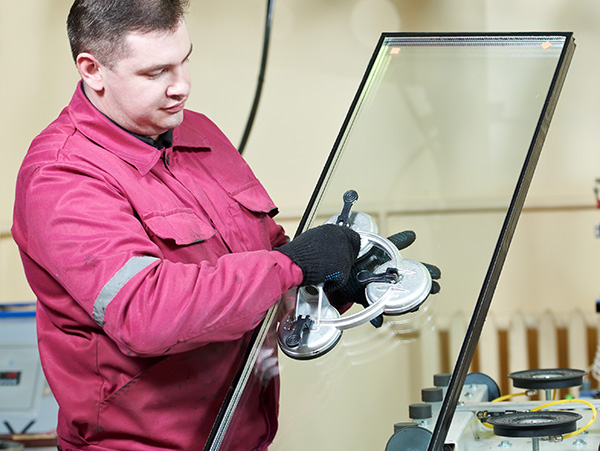 Minor variation in coated or insulated glass
Double-glazed and coated units can sometimes show slight differences in reflection or colour tone between panes. They can originate from coatings, glass thickness, manufacturing tolerances, viewing angle, or changing light conditions.
Issues that are more likely to be genuine manufacturing defects
While some variations in glass are normal, there are limits. It’s important to know what these are, and not to use glass that fails to meet the necessary standards, as damaged or defective glass is a safety risk.
Below are the things you can look out for that show glass is defective and thus unusable.
(Note: defects are usually visible under normal lighting and viewing conditions.)
1. Visible inclusions, stones, or bubbles in important viewing areas
Sometimes small particles are trapped during glass production. These inclusions, stones or seeds may be considered acceptable or may be considered defects, depending on a number of factors such as:
- Number of imperfections
- Size of the defect
- Distance between defects
- Position within the pane
These inclusions are assessed using standardised inspection methods, usually against criteria set by the Glass and Glazing Federation or British Glass.
2. Scratches, digs, and abrasion that remain visible after cleaning
The most commonly reported imperfections on glass are surface damage. Careless handling during the manufacturing process can lead to long scratches, abrasion marks, scuffing or damage to the coating of the glass.
If these remain after cleaning, they are permanent defects.
3. Chips or cracks in the edge of the glass that reach into the body of the pane
If glass chips or damage on the very edges, you need to pay attention. The unique structure of glass means that stress concentrates around chips or cracks in the edges, so even if they seem small, they’re likely to grow substantially over time.
This type of damage is even riskier in toughened or laminated glass as heat treatments increase the tension in glass even further.
If damage to the edge of glass does disrupt the entire pane, this can eventually cause ‘spontaneous glass breakage‘
4. Moisture (or condensation) between panes
This defect only applies to double or triple glazed glass, but if you spot it you can be certain your glass is defective.
Double and triple glazed units are designed as sealed systems; this is to keep the inert gas that provides their insulation contained. If those seals are damaged, then moisture is able to get inside the cavity between the panes, where it’s usually visible as condensation.
This is something that will happen eventually with all insulated glass units, but it is failing over time. For new units, the seals should be strong – if you see condensation inside the units, they’re likely defective.
5. Significant optical distortion
With windows, mirrors, or other standard glass uses, there shouldn’t be noticeable distortion when you look through them.
If reflections are warped or visibility through the panes is affected, this is likely glass that developed a fault during the creation process.
The perfect glass doesn’t exist…
Or if it does, it would cost so much to create that it would not be worthwhile. It’s more important that your glass is fit for purpose – gives a clear, unobstructed and undistorted view – than being completely perfect.
Here at KLG Glass, we only provide high-quality glass that delivers exactly what you need. So whether you need new double glazed units, a glass splashback, or glass balustrades, when you buy from us you can trust your glass will arrive looking great with a long lifespan ahead. Talk to our team today to find out more.