
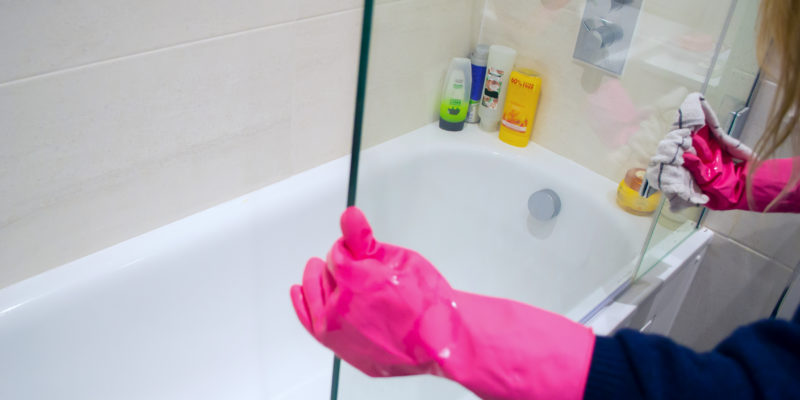
Updated for 2026
Glass shower screens protect your bathroom and look stunning. Every time you take a shower, a glass shower screen creates a barrier against water, soap, shampoo, conditioner and even steam – helping to keep your bathroom walls and floors free from stains and unsightly marks.
Unfortunately, this does mean that a sparkling shower door can easily be spoiled by dirt and grime that builds up over time.
When this happens, your glass shower door won’t look clean and sparkling no matter how much you clean it. Cleaning your glass shower screen regularly is the best way to stop this from happening, and helps to keep your bathroom looking its absolute best.
In this post we’ll cover the best ways to clean a shower screen, as well as answer some commonly asked questions to help you keep it as clean as possible in the long term too.
What causes cloudy or stained shower glass?
When shower screens are dirty, they tend to look cloudy and opaque. This makes it very noticeable that they’re in need of cleaning, which can be off-putting.
This cloudiness is caused by three things: limescale, soap scum, or surface damage.
Limescale
Limescale is a white, chalky-looking substance that is mainly made up of calcium carbonate. It occurs when ‘hard water’ (water with a high concentration of minerals in it) evaporates, leaving this chalky deposit in its wake.
Research by the World Health Organisation found that water with 200mg/l of calcium carbonate produces limescale and is classed as ‘hard’.
The UK Government found that around 60% of homes in the UK received hard water. The East Midlands (including Nottinghamshire) has an average rating 341mg/l is very hard, so houses in this area are particularly vulnerable to limescale.
This is obviously a high percentage and the majority of these homes will find themselves afflicted with limescale. If your shower screen seems to become cloudy quickly, this is likely why.
If you want to know more about the water in your area, tapwater.uk is an independently run site that lets you check your water quality (including hardness) based on postcode.
Soap scum
It might seem counterintuitive, but leaving soap, shampoo or shower gel suds on your glass screen can actually make it dirty.
The liquid in these products may evaporate, but they will still leave a sticky, cloudy residue that combines with the minerals in water to create dirt.
(There is actually a type of bacteria that feeds on the fats in detergents like shampoo and shower gel. It looks like pink mould, and is often found in showers or sinks that stay damp most of the time.)
Permanent etching or surface damage
Unfortunately, not all clouding on showerscreens is caused by dirt. This also means it can’t always be removed.
Scratches and scuffs to the surface of the glass can make it look like there is dirt on your shower screen, when it’s actually damaged. And when this happens, if you try to clean it with aggressive scrubbing, you won’t make it look cleaner – you might actually damage it more and make it look worse.
Unfortunately, prolonged exposure to soap, cleaners and limescale can cause damage to glass in itself. This is why it’s important to buy high-quality shower screens and maintain them regularly.
What to Clean a Shower Screen With
There are many different options for cleaning a shower screen. Standard bathroom cleaners and glass cleaners can do a great job. But, if you’d prefer to stay away from strong chemical-based cleaners, there are also a few home remedies that are very effective alternatives.
Our favourite option is a vinegar and washing-up liquid solution. The washing-up liquid cuts through any dirt or grease built up on the glass. Meanwhile, the acid in the vinegar will cut through the dirt but also stop any streaks from forming as it dries.
Find exact quantities for the best homemade glass cleaner here.
Step-by-step guide to cleaning your glass shower screen
What You Will Need:
- A sponge
- Bathroom cleaner
- Glass Cleaner
- Squeegee
- Paper towels
- Microfibre cloth
How to clean a glass shower screen: step by step
1.Remove loose dirt
The easiest way to do this is by rinsing the screen with clean water. However, certain cleaners do work best on dry surfaces, so if this is the case, wipe it down with a soft cloth instead to catch any dirt or hair.
2. Apply your cleaner
If using a shop-bought cleaner, follow the instructions on the packaging. If using our homemade cleaning solution, liberally spray it across both sides of your screen, so the entire surface is covered.
Note: If you are using a vinegar based cleaner, try to keep it to the glass surface only and wipe away if gets onto any other surfaces as it may damage them, depending on the material they are made from.
3. Allow the cleaner to sit
Almost all cleaning products take some time to work. Again, follow commercial cleaner’s instructions, but if you’re using a homemade one, then make sure to leave it five minutes to penetrate the limescale and soap residue and loosen it.
4.Wipe the glass
Take a non-abrasive sponge or cloth and wipe away the dirt and cleaner. When left to sit, the cleaning liquid should do most of the work for you and you don’t need to scrub. If needed, use more effort, but don’t be tempted to reach for a harder sponge or even a brush. This will risk damaging the surface of your screen.
5. Rinse thoroughly
Remove all the dirt and cleaner residue with water. This could be with your shower head or just using a new wet cloth or sponge without any cleaner on it. Make sure to get all the residue off though, as any left behind will just start ‘clouding’ the surface again.
6. Check how clean the screen looks
By now your shower screen should be squeaky clean and completely clear. If there are marks left on the surface, you should inspect them to see if it’s dirt or damage.
If it’s dirt, start the cleaning process again, but if it’s damaged leave it. Any further scrubbing could make it worse.
7. Squeegee the screen
As evaporated water will create more marks on the screen, it’s important you get the screen dry as quickly as possible. The best way to do this is to squeegee excess water away, as this will also remove any streaks from the glass surface too.
8.Spritz with glass cleaner
If for any reason the surface still looks slightly dull or has streaks, then grab a specialised glass cleaner, or lightly spritz with a mix of vinegar and water and buff the surface dry.
What should you not use on a glass shower screen?
Even high-quality glass can be vulnerable to damage – especially if you’ve accidentally let soap or limescale build up on the surface.
This means you should never use abrasive cleaning items like scouring pads, steel wool, harsh abrasive powders or excessive pressure to clean your screen.
You should also be careful with your bathroom cleaners. Mixing certain chemicals can create dangerous chemical reactions with potentially disastrous consequences, so you need to be careful with what you pick.
For example, many people will use bleach to clean their bathroom. If you also use our homemade glass cleaner, take care not to mix this with bleach, as this can create lethal chlorine gas!
How to Keep Your Shower Glass Spotless
No one really looks forward to cleaning their shower screen anymore than they look forward to cleaning their windows or other glass surfaces. It’s not harder to clean a shower door either, but if you don’t do it regularly, it can be a bit tougher.
The best way to avoid damaging or scratching the glass of your shower screen is to clean it after every use, then use a squeegee afterwards to remove any water and stop hard water deposits of magnesium and calcium building up and damaging the glass.
Even if you can’t manage this every day, the more often you can, the better for your glass, so try to do it as often as possible. Even a couple of times a week is better than never.
Another thing you can do to protect your shower screen is to use something that displaces water. This helps water roll off rather than sit on the glass, and reduces the deposits that will build up.
There are a few options for this. Cleaning with WD40, baby oil, cooking spray, or a specialist car windscreen cleaner will all create this protective layer. However, applying such products does take time and care, as you’ll have to work hard to avoid smears and grease. If you can master it though, you’ll find stains don’t build up so quickly between cleans!
Alternatively, many specialist shower screen cleaners will have these properties built-in. Simply spritz your screen after use, and this will help stop water and soap from evaporating and leaving deposits behind.
How often should you clean a glass shower door?
The exact frequency of how often you need to clean your shower door will depend on how well you maintain it in between. If you follow our steps above, and squeegee it every time the shower is used, and apply a protective barrier like a specialist cleaning spray, you may only need to ‘deep clean’ the screen every few weeks.
If you don’t, then you will likely need more regularly. Again, the frequency needed will depend on the water quality in your area, and how quickly soap scum and limescale build up in your bathroom.
In Nottinghamshire and areas with similar levels of hard water, cleaning once a week is a good aim to protect your screen. Nothing terrible will happen if you miss a week, but this level of regularity will help keep the screen from being damaged.
FAQs about cleaning shower doors
How do I clean a glass shower screen without leaving a streaky finish?
To avoid leaving a streaky finish to your shower screen, make sure to use an appropriate cleaner. Our homemade option or a specialist shower cleaner are best.
Also make sure you don’t use too much cleaner, rinse it all off, and remove the remaining water with a clean squeegee after cleaning.
Why does my shower glass keep going cloudy?
Cloudiness is commonly caused by hard-water mineral deposits, soap scum or a combination of the two. If cleaning no longer improves the appearance, the glass may have developed permanent etching or surface damage.
Can I use white vinegar to clean shower glass?
White vinegar can be a great way to dissolve the mineral deposits that hard water leaves on glass. It also helps reduce the chances of streaking.
However, if you do use vinegar, make sure it doesn’t get on any incompatible surfaces and NEVER mix it with bleach.
Can I use baking soda on a glass shower screen?
Some homemade glass cleaner recipes suggest using baking soda on shower screens. However, it works as a mild abrasive, so if your shower screen is damaged due to scum build-up, it may actually damage your screen instead.
Can I use a razor blade to clean shower glass?
We don’t recommend using a razor blade to clean shower glass. If the blade is unsuitable or used incorrectly it can cause damage to the surface of the glass or remove any protective coatings on the glass.
Don’t recommend this as a general-purpose cleaning technique. An unsuitable scraper can scratch or damage the glass or coating. Use the cleaning method
Why won’t my shower glass become clear after cleaning?
If mineral deposits have remained on the glass for a long time, they can cause permanent surface damage or etching. If the glass remains cloudy after appropriate cleaning, increasingly abrasive cleaning may not solve the problem.
Is there a way to stop limescale building up on shower glass?
Removing water from the glass after each shower is one of the simplest preventative measures. A squeegee reduces the amount of water left to evaporate and deposit minerals on the surface.
So, What’s the Best Way to Clean Glass Shower Doors?
There are a variety of methods for cleaning glass shower doors, but the most important thing to remember is to stay on top of cleaning. Each clean will be quicker to manage, and less buildup will reduce the chances of scratching and staining. Keep it clean and your glass shower door will sparkle for years to come!
Has your glass shower screen reached the point of no return and any rescue attempt seems futile? If so, why not consider a shiny new made-to-measure shower door that’s bespoke to your bathroom? If you’re keen to find out more, get in touch!